How to remove excess water without damaging the shape
Do not twist cotton knitwear. Wet cotton becomes heavy, and twisting may stretch the loops and deform the edges or seams.
The correct method:
- Gently press out excess water with your hands without twisting.
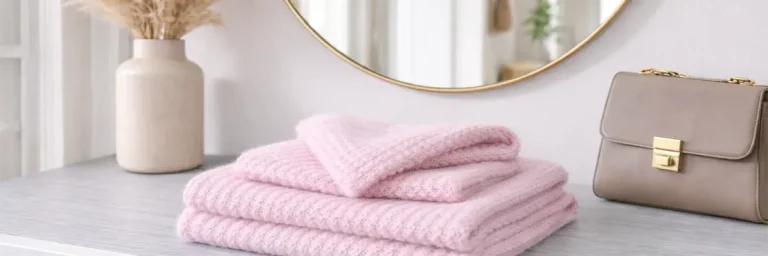
- Lay the garment on a clean, dry towel.
- Roll the towel loosely with the garment inside.
- Press carefully so that the towel absorbs the excess moisture.
- Repeat with another dry towel if necessary.
Do not lift or pull a wet garment by the sleeves, neckline, or lower edge.
Drying: always preserve the shape
Proper drying is especially important for cotton knitwear. Wet cotton becomes heavy and may stretch under its own weight.
How to dry cotton knitwear correctly
What not to do
- Do not hang a wet garment on a hanger.
- Do not dry it on a washing line.
- Do not attach it with clothes pegs.
- Do not place it on a radiator or heater.
- Do not use a tumble dryer unless the care label specifically allows it.
- Do not dry it in direct sunlight.
Vertical drying may cause the garment to stretch in length. Hangers and clothes pegs may also leave marks and distort its shape.
Can cotton knitwear be tumble-dried?
Tumble drying is suitable only if the relevant symbol appears on the care label.
High temperatures often cause cotton to shrink. Intensive drum movement may also affect the knitted structure and the overall shape of the garment.
To preserve the original size and fit, it is safer to dry cotton knitwear naturally in a horizontal position.
Ironing and steaming
After proper drying, many knitted garments do not need ironing.
To remove creases:
- use a garment steamer from a short distance,
- do not stretch the fabric during steaming,
- iron the garment from the reverse side,
- follow the temperature indicated on the care label,
- place a thin cotton cloth between the iron and the garment,
- do not press heavily on textured knitting.
Strong pressure may flatten raised patterns. Take particular care with cables, openwork details, and textured knits.
After steaming, leave the garment flat until it is completely dry and cool.
How to preserve the colour
Coloured cotton garments may gradually lose brightness, especially with frequent washing and drying in sunlight.
To help preserve the colour:
- wash the garment inside out,
- use a temperature of up to 30°C,
- choose a detergent for coloured fabrics,
- do not leave the garment soaking for a long time,
- keep it out of direct sunlight while drying,
- separate white, dark, and brightly coloured items,
- do not use bleach on coloured garments.
New brightly coloured garments should preferably be washed separately the first few times.
Pilling: why it appears and how to remove it
Pilling is not limited to wool. Cotton knitwear is also exposed to friction, especially around the side seams, underarms, sleeves, and areas that come into contact with bags or outerwear.
The amount of pilling depends on the quality of the yarn, the density of the knit, how often the garment is worn, and how it is cared for.
How to remove pilling
- Use a fabric shaver.
- Treat only a completely dry garment.
- Place the garment on a flat surface.
- Do not press the shaver too firmly.
- Avoid seams, buttons, and decorative details.
Do not pull pills off by hand. This may stretch the yarn and damage the loops.
How to reduce pilling
- Wash the garment inside out.
- Use a laundry bag.
- Do not wash it with rough fabrics.
- Avoid constant friction from straps, bags, and coarse outerwear.
How to remove a stain
A fresh stain should be treated as soon as possible.
- Blot the stain with a clean cloth or tissue.
- Do not rub it across the surface.
- Apply a small amount of liquid detergent to a damp cloth.
- Gently treat the stain from the outside towards the centre.
- Rinse with cool water.
- Dry the garment flat.
Before using a stain remover, test it on an inconspicuous area.
Do not use chlorine bleach or scrub the fabric with a stiff brush. This may affect the colour, damage the fibres, or stretch the loops.
What to do if the garment has shrunk
Cotton may shrink because of hot water, intensive spinning, or tumble drying. It is not always possible to restore the original size completely.
You can try the following:
- Soak the garment in cool water.
- Remove excess moisture with a towel.
- Lay the garment flat.
- Gradually reshape it without pulling sharply.
- Leave it to dry on a flat surface.
Do not pull only one area. The garment should be reshaped evenly in both length and width.
What to do if the garment has stretched
Stretching often happens because of vertical drying, storage on a hanger, or improper spinning.
To correct the shape:
- Wash the garment according to the care label.
- Remove excess water with a towel.
- Lay it on a flat surface.
- Gently reshape it by hand.
- Align the seams, sleeves, and edges.
- Leave it until completely dry.
Do not try to shrink the garment with hot water or high temperatures. The result may be uneven.
Storing cotton knitwear
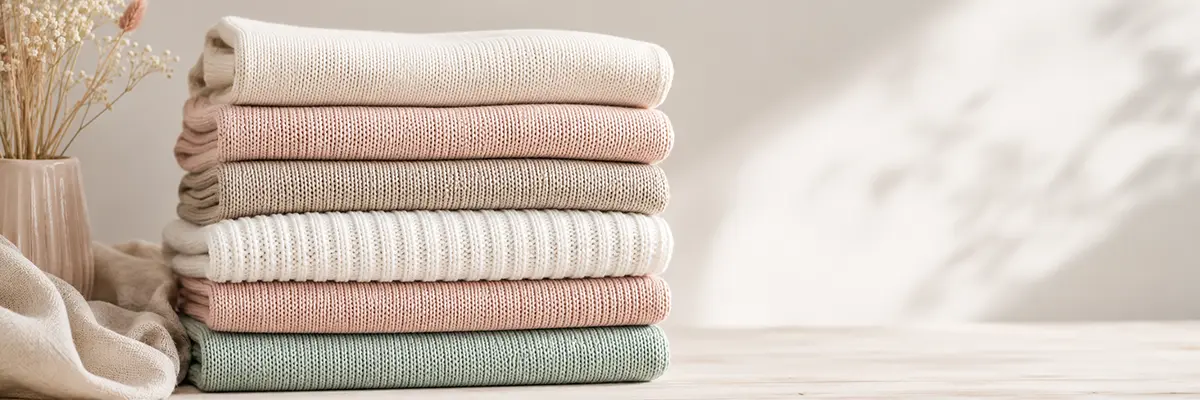
Knitted garments are best stored folded. On a hanger, they may stretch, especially around the shoulders and neckline.
Storage rules:
- Store only clean and completely dry garments.
- Do not place very heavy items on top.
- Leave enough space on the shelf.
- Do not store knitwear in a damp room.
- Use a cotton storage bag or breathable cover for long-term storage.
- Air the wardrobe regularly.
- Do not leave the garment in direct sunlight for long periods.
Natural fabrics should not be stored permanently in airtight plastic bags. Poor ventilation may cause unwanted odours or moisture build-up.
How to fold a knitted garment correctly
Lay the garment face down on a flat surface. Straighten the sleeves and side seams. Fold the sleeves inwards, then fold the garment in half or into three sections.
Do not roll it too tightly or place heavy objects on top. This helps preserve the volume and knitted structure.
Common care mistakes
Cotton knitwear most often loses its shape because of the following mistakes:
- washing in hot water,
- using an intensive spin cycle,
- twisting the garment by hand,
- drying it on hangers or washing lines,
- using a tumble dryer without the manufacturer’s permission,
- pressing too firmly when ironing,
- storing the garment on a hanger for a long time,
- using harsh bleach,
- washing it with items that have hook-and-loop fasteners or metal decorations.
Quick care guide
- Always check the care label.
- Wash at up to 30°C.
- Use a delicate cycle and liquid detergent.
- Turn the garment inside out.
- Do not rub, twist, or wring.
- Choose a low spin speed.
- Remove excess moisture with a towel.
- Dry flat.
- Keep away from radiators and hot air.
- Store the garment folded.
- Remove pilling with a fabric shaver.
Gentle care helps cotton knitwear preserve its original shape, colour, and neat appearance for longer. The most important rules are to avoid high temperatures, strong mechanical action, and vertical drying while the garment is wet.



 Quick View

 Quick View
 Quick View
 Quick View

 Quick View

 Quick View

 Quick View