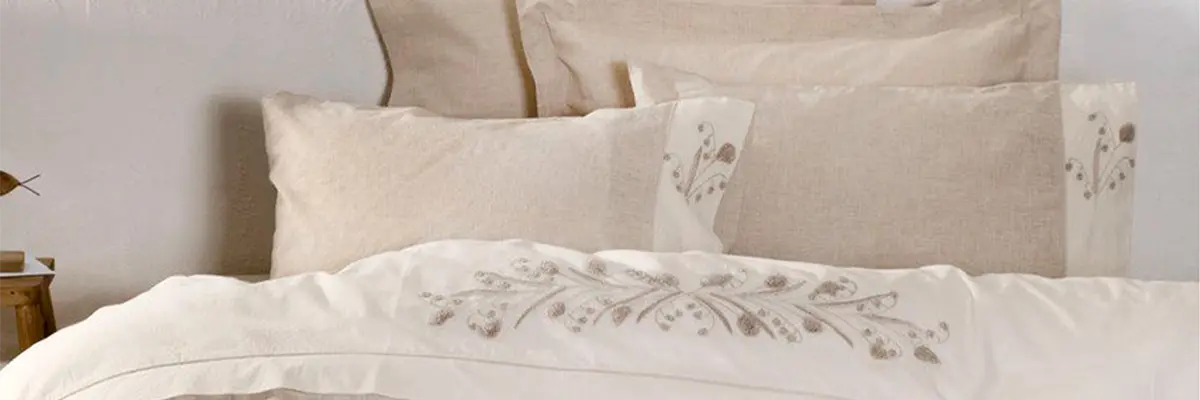
Лененото спално бельо се цени заради естественото си усещане, дишащите свойства и характерната текстура, която с времето става по-мека и по-изискана. Ленът издържа добре на ежедневна употреба, но се нуждае от правилна грижа: подходяща температура, щадящо центрофугиране и внимателно сушене. По-долу ще намерите ясен гид за грижа за ленено спално бельо — как да го перете, сушите, гладите и съхранявате, за да запази материята своя цвят, форма и комфорт за кожата.
Как да перете ленено спално бельо
Ленът не се страхува от пране, но не обича крайности: прекалено гореща вода и агресивни химикали. Най-добрата грижа зависи от плътността на материята и цвета.
- Преди първото пране проверете етикета за грижа и сортирайте спалното бельо по цвят.
- Обърнете калъфките за възглавници и плика за завивка наопаки — това намалява износването на външната страна.
- Изберете програма „Памук“ или „Деликатно пране“ с достатъчно вода.
- Температура за ежедневно пране: 30–40°C (за светло, плътно ленено бельо по-висока температура може да е допустима, ако етикетът го позволява).
- Използвайте мек течен препарат без белина или агресивни ензими — ленът остава по-мек и запазва цвета си по-дълго.
- Не претоварвайте барабана: ленът се нуждае от пространство, за да се изплакне добре.
Съвет за комфорт: ленът става по-мек след няколко цикъла на пране. Това е нормална част от „отварянето“ на влакната.
Центрофугиране и изплакване: как да предотвратите гънки и деформация
Основното предизвикателство при лена са дълбоките гънки и твърдостта, ако материята се пресуши или се центрофугира твърде интензивно.
- Настройте центрофугата на 600–800 оборота (или по-ниско за леки материи).
- Добавете допълнително изплакване, ако използвате прах за пране или ако водата ви е твърда.
- Избягвайте омекотители на силиконова основа: те могат да намалят попивателната способност и да „свържат“ влакната.
Ако искате по-меко усещане, по-добре е да изберете щадящ препарат за естествени материи и да избягвате пресушаването — това работи по-добре от силните омекотители.
Как правилно да сушите ленено спално бельо
Правилното сушене е ключово за равномерна текстура и по-малко гънки.
- Веднага след пране изгладете материята с ръце и я изтръскайте добре — това помага да се намалят гънките.
- Сушете в добре проветриво помещение или навън, като избягвате силна пряка слънчева светлина при цветни изделия.
- Ако използвате сушилня, изберете ниска температура и програма за естествени материи (само ако етикетът за грижа го позволява).
- Не пресушавайте: ленът се изглажда по-лесно, когато е все още леко влажен.
Трябва ли да гладите лен и как да го направите правилно
Лененото спално бельо често се избира именно заради своята естествена „жива“ текстура. Ако харесвате натуралния вид, гладенето не е необходимо. Ако предпочитате по-гладък завършек:
- Гладете лен леко влажен или използвайте пара.
- Настройте температурата на ютията на лен (обикновено висока), но следвайте етикета за грижа.
- Гладете цветните комплекти от вътрешната страна, за да помогнете за по-дълго запазване на нюанса.
- При плътен лен обработката с пара често е по-удобна — има по-малък риск от прекомерно притискане на материята.